From blank page to ready paper in minutes
What used to take a full evening of flipping through NCERT and old papers now takes a few minutes — set the blueprint, generate, tweak, print. Set papers for all your classes in one sitting.

Generate a full, blueprint-based question paper in minutes — pick your board, class, subject and chapters, and Orbit builds a properly weighted paper with Sections A to E, MCQs to long answers, marks distribution and a marking scheme. NCERT-aligned, exam-pattern accurate, and editable before you print.
Human-reviewed output · school-safe workflows
Orbit's AI Question Paper Generator helps teachers turn an exam blueprint into an editable paper with sections, question types, marks and a marking-scheme draft. Teachers set board, class, subject, chapters and difficulty, then verify totals, syllabus coverage, wording and answer guidance before approving the paper for school use.
A balanced paper means hitting the blueprint, holding chapter weightage, mixing difficulty and still totalling exactly 80 — usually for three or four classes at once, late at night, in Word. Orbit does the arithmetic. You keep the judgement.
What used to take a full evening of flipping through NCERT and old papers now takes a few minutes — set the blueprint, generate, tweak, print. Set papers for all your classes in one sitting.
The marks always total exactly. Section counts, per-question marks and chapter weightage follow the CBSE / ICSE / State pattern you chose, so the exam cell never sends it back.
Every paper ships with a separate step-wise answer key / marking scheme, so valuation is consistent across teachers and faster for you and your colleagues.
Give Orbit essential context. Review its structured output. Keep final teaching decisions with educator.
Select CBSE, ICSE or your State board, pick the class (1-12) and subject. Orbit instantly loads the correct exam pattern and NCERT/board chapter list for that combination.
Tick the chapters to cover, set total marks, duration and the difficulty mix. Accept the board's default weightage or paste your school's own blueprint — Orbit honours either.
Orbit's AI builds a complete, section-wise paper — MCQs and Assertion-Reason through to case-study and long-answer questions — with marks against every question and a running total that matches your blueprint exactly.
Regenerate any single question, change its difficulty, reword it, or re-roll the whole section. Add your school name, exam title and general instructions. Nothing is locked — you stay in control.
Download a clean, print-ready question paper plus a separate answer key / marking scheme as PDF or Word. Ready for the exam cell, no copyright marks, fully your own.
CBSE · Class 10 · Mathematics (Standard)
3 hours
A blueprint-based CBSE Class 10 Maths paper (80 marks, 3 hours) with Sections A–E from MCQ to case-study, marks against each question, and a chapter-wise weightage table. Fully editable in Orbit before you print.
Teacher review stays essential. Orbit creates an editable first draft. Check facts, difficulty, local context and school policy before sharing it with students.
Clear output, faster iteration and final educator control—the things that matter during a real school day.
What used to take a full evening of flipping through NCERT and old papers now takes a few minutes — set the blueprint, generate, tweak, print. Set papers for all your classes in one sitting.
The marks always total exactly. Section counts, per-question marks and chapter weightage follow the CBSE / ICSE / State pattern you chose, so the exam cell never sends it back.
Every paper ships with a separate step-wise answer key / marking scheme, so valuation is consistent across teachers and faster for you and your colleagues.
Re-roll any question or whole section to get genuinely new, unrepeated questions — including competency-based case studies and HOTS — instead of recycling the same sums.
Add your school name, exam title and instructions, reword anything, and export clean PDF/Word with no logos or copyright marks. The paper is entirely your own.
Open Orbit to draft a blueprint-led paper, or fill the demo form to see the complete teacher review workflow for your school.
Easy reads about AI in classrooms, what makes great schools tick, and the cool tools we are building.
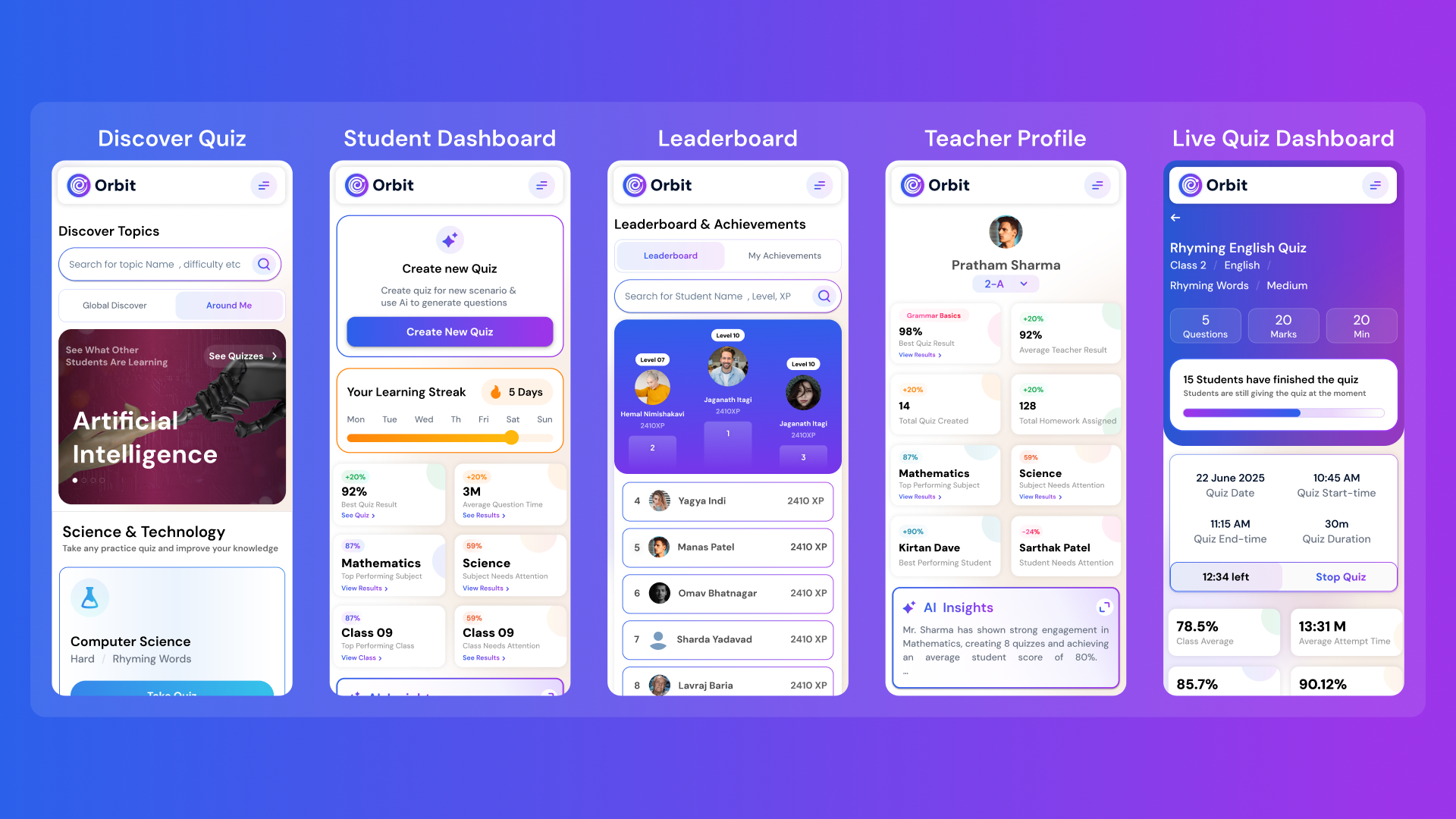
Orbit v1.4.7-beta brings a smarter and more personalized learning experience for students and teachers. With a new student dashboard, subject performance tracking, leaderboards, and real-time teacher analytics, Orbit makes learning interactive and data-driven.


From cutting attendance time to unlocking personalized learning, smart AI assistants are giving educators back what they’ve always needed most. The time to inspire. Discover why the future of education isn’t AI vs. Teachers, but AI + Teachers.

Taking attendance shouldn’t eat up your mornings. Discover how principals across India are cutting hours of wasted time and securing their campuses with Inforida’s Goood Morning — a biometric attendance system built for accuracy, safety, and peace of mind.
Everything you need to know about Inforida's platform, pricing, and implementation.
Open Orbit AI from this page to check current access for your account, or fill the school demo form for a guided walkthrough and plan details. The full sample here is visible for evaluation without implying a separate free plan.
The workflow accepts CBSE, ICSE/CISCE and supported State-board contexts across relevant classes and subjects. Confirm the exact board, syllabus and subject available in Orbit, then verify the output against current official requirements.
Yes. For CBSE you can follow the official exam pattern and weightage — Sections A to E, the right MCQ-to-long-answer split, Assertion-Reason and competency-based case-study questions — and questions are drawn from the NCERT chapters you select. For ICSE and State boards, Orbit follows that board's own pattern and prescribed syllabus.
Absolutely. Paste your school's blueprint or set the marks split, difficulty mix and chapter weightage yourself, and Orbit builds the paper to match. You can also start from the board default and adjust it.
Yes. Generate anything from a 20-mark class test or 40-mark unit test to an 80-mark half-yearly, pre-board or full board-pattern model paper. Just set the total marks and duration, and the structure scales accordingly.
Yes. Alongside the question paper, Orbit produces a separate step-wise marking scheme / answer key so valuation is consistent and quicker — useful when several teachers correct the same paper.
Every question is editable. Reword it, change its difficulty, swap in a different question, or re-generate a whole section. You can add your school name, exam title and general instructions, then export to clean PDF or Word with no watermarks or copyright marks.
Orbit generates fresh questions modelled on the board's style and your chosen NCERT chapters, rather than copying any published paper. There are no board logos, emblems or copyrighted text in the output, so the paper is safe to use and fully your own.
Orbit is the AI co-pilot inside Inforida's school platform, alongside Nucleus ERP, Goood Morning face attendance and the parent app. Papers you generate can sit next to your lesson plans, worksheets and grading tools in one place — and Orbit also includes a student-facing AI tutor.
Take attendance, collect fees, send messages and run the day, all from your phone. Made for school heads who are always on the move.